

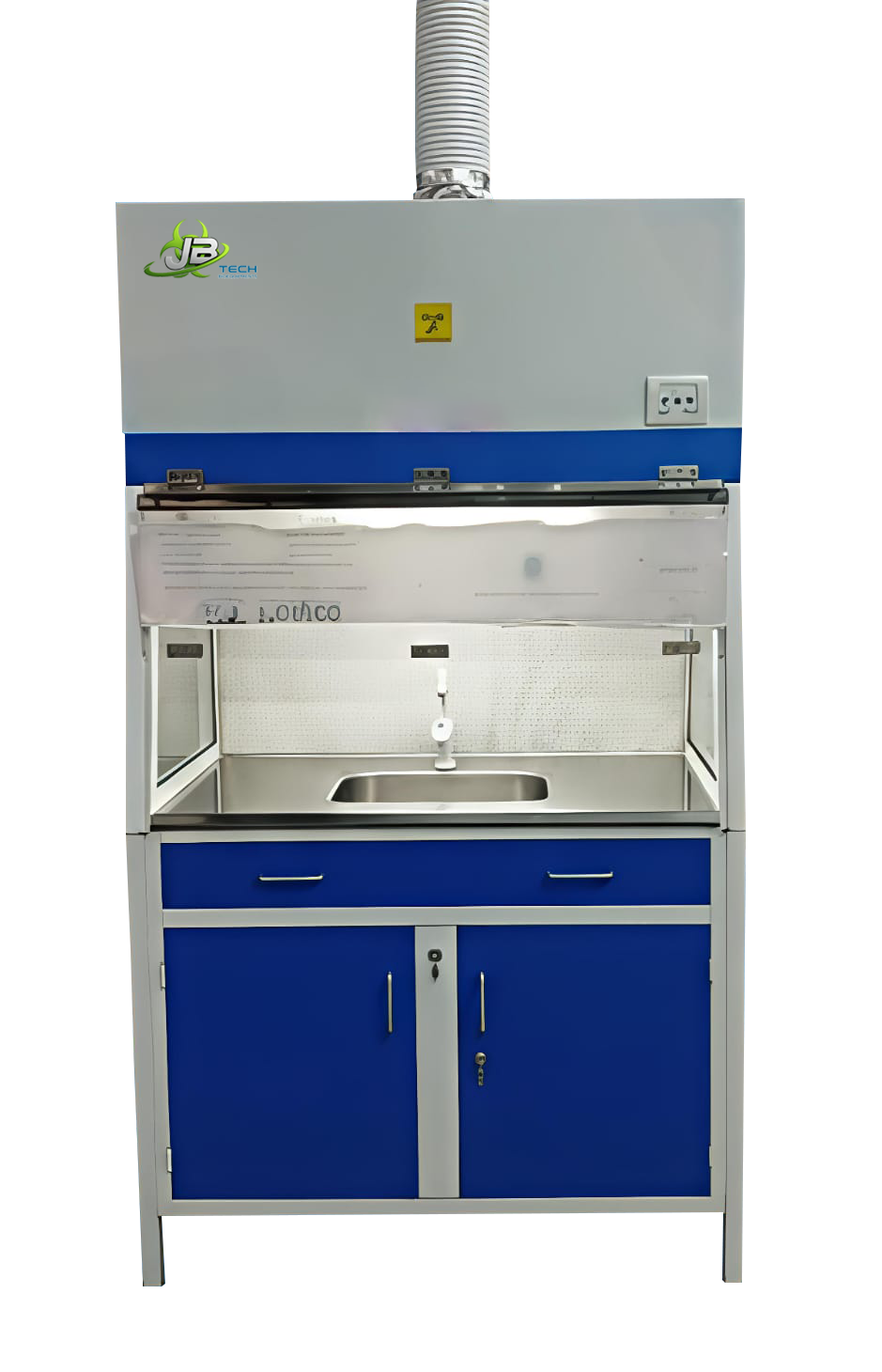
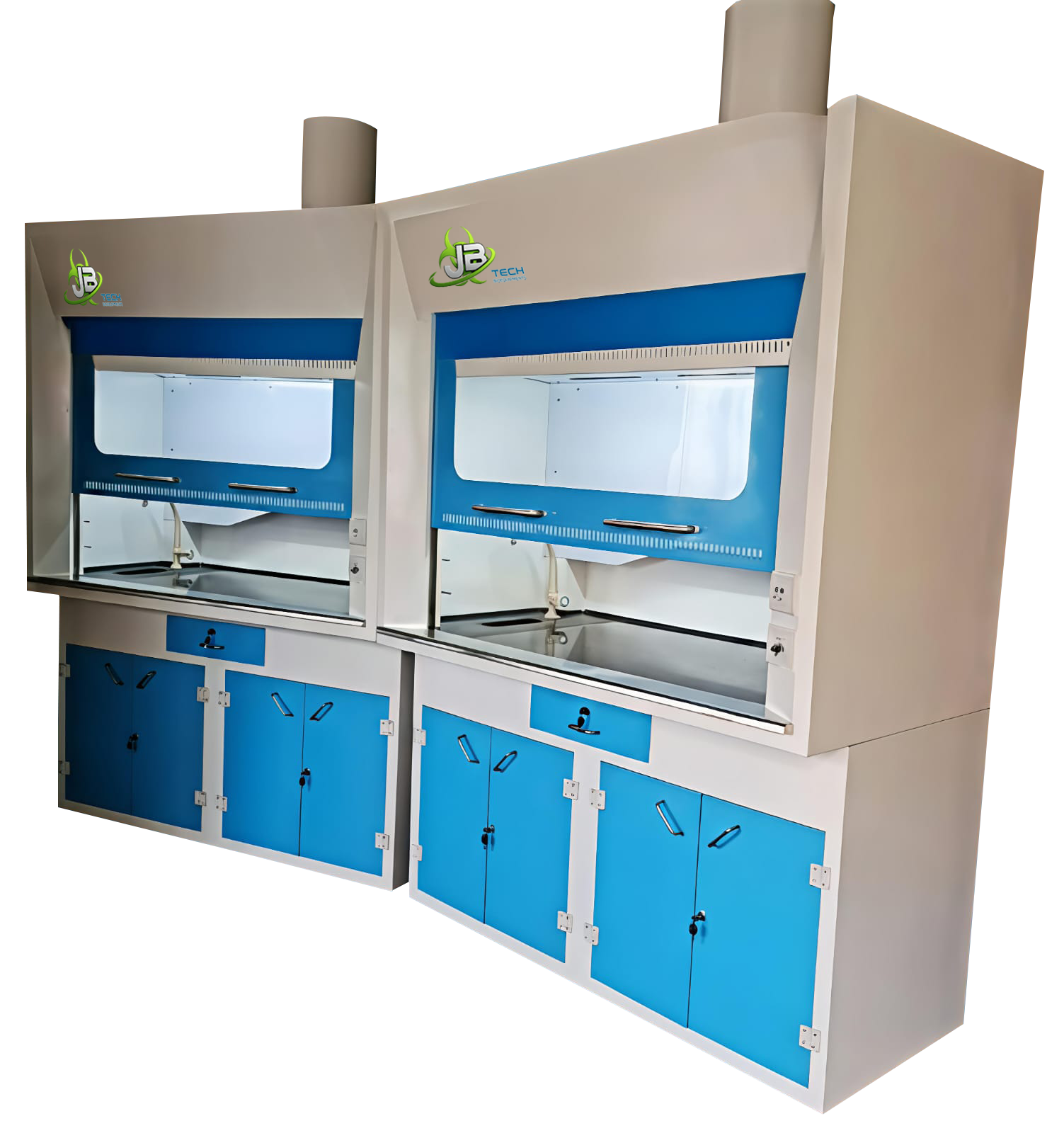
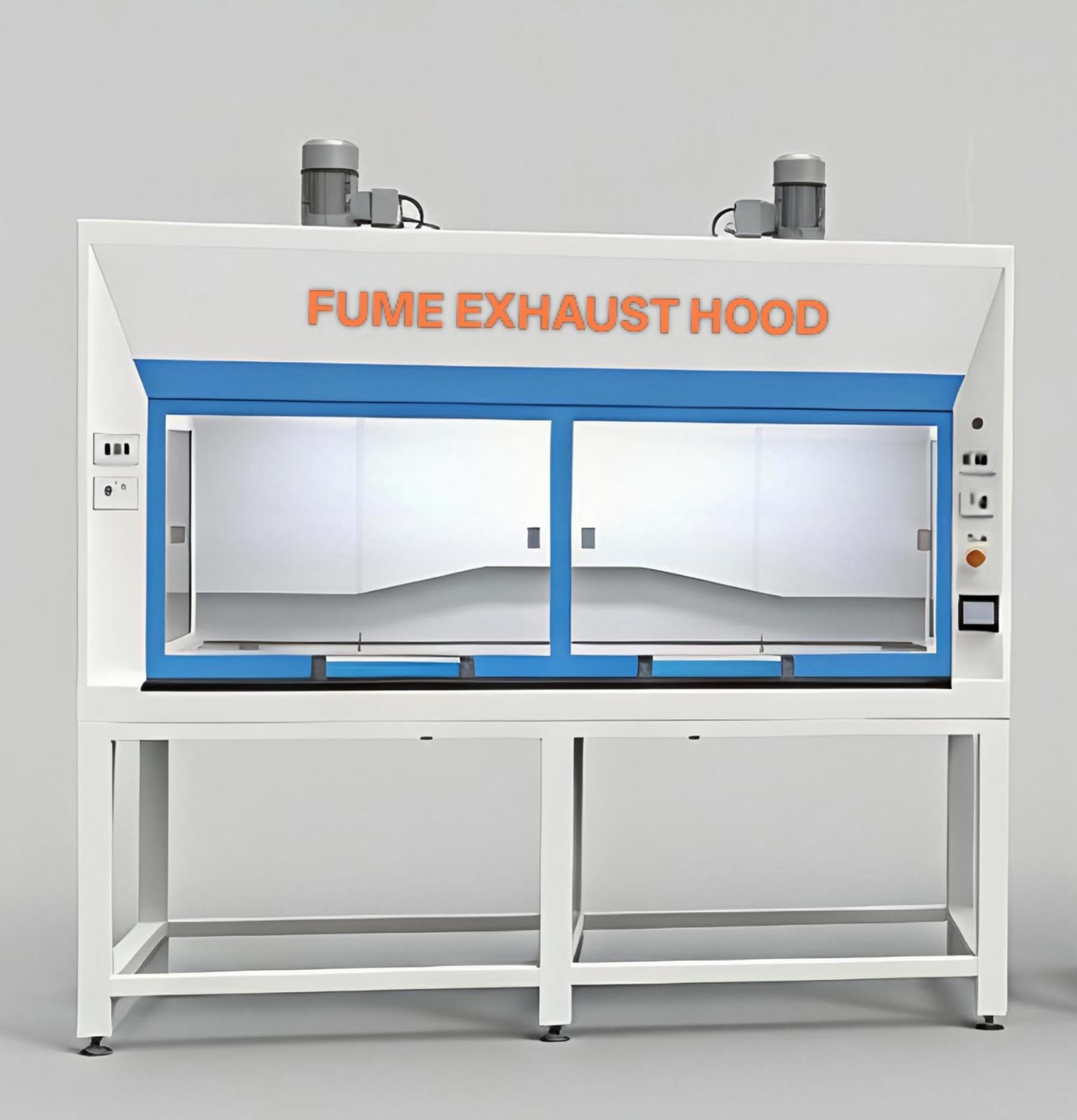
“JB TECH” A fume hood is a ventilated enclosure in which gases, vapors and fumes are captured and removed from the work area. An exhaust fan situated on the top of the laboratory building pulls air and airborne contaminants through connected ductwork and exhausts them to the atmosphere.
The slots and baffles within the hood direct the air and, in many hoods, can be adjusted to allow the most even flow. It is important to prevent the baffles from becoming blocked, by excessive material storage or equipment, since this significantly affects the exhaust path within the hood and as a result, the efficiency of hood capture.
The bevelled frame around the hood face, called the airfoil , allows for even air flow into the hood by eliminating sharp curves to reduce turbulence.
| Material & Construction | Construction involves building a specialized ventilated enclosure, typically using chemical-resistant materials like 304/316 stainless steel, specialized wood (ply-lam), or chemical-resistant composites. |
| Airflow Pattern (Baffles) | Air moves through the sash opening, passes over the work surface, and is directed by interior baffles (slots) to the exhaust duct, maintaining laminar flow and minimizing turbulence. |
| Negative Pressure and Airflow | The hood maintains a lower pressure inside than the surrounding room. Air flows from the higher-pressure room into the lower-pressure cabinet, creating a barrier that forces contaminants toward the rear baffle and up the exhaust system. |
| Face Velocity | The speed of air entering the hood, typically set between 0.4–0.6 m/s (80–120 FPM), must be high enough to capture contaminants but not so high that it creates turbulence. |
| Sash Height | Keep the sash as low as possible (ideally 18 inches or less) while working. |
| Airfoil | A curved frame at the base/sides of the sash opening improves airflow efficiency by preventing turbulence. |
| Constant Volume (CAV) | The exhaust fan runs at a constant speed, maintaining steady and consistent airflow. |
| Variable Air Volume (VAV) | Adjusts exhaust flow automatically based on the sash position to save energy. |
| Sash Position | A moveable window (vertical or horizontal) that provides a safety barrier and maintains proper airflow velocity. |
| Safety and Protection | Prevents hazardous, toxic, or flammable substances from entering the laboratory atmosphere. |
| Equipment Protection | Protects sensitive laboratory equipment from corrosion caused by fumes and ensures safe, breathable air for researchers. |
| Clearance | Do not block rear baffles with large equipment, as this disrupts airflow. |
| Bench-top Fume Hood |
| Floor-mounted Fume Hood |
| Double-faced Fume Hood |
| Portable Fume Hood |
| Distillation Fume Hood |
| Perchloric Acid Fume Hood |
| Radioisotope Fume Hood |
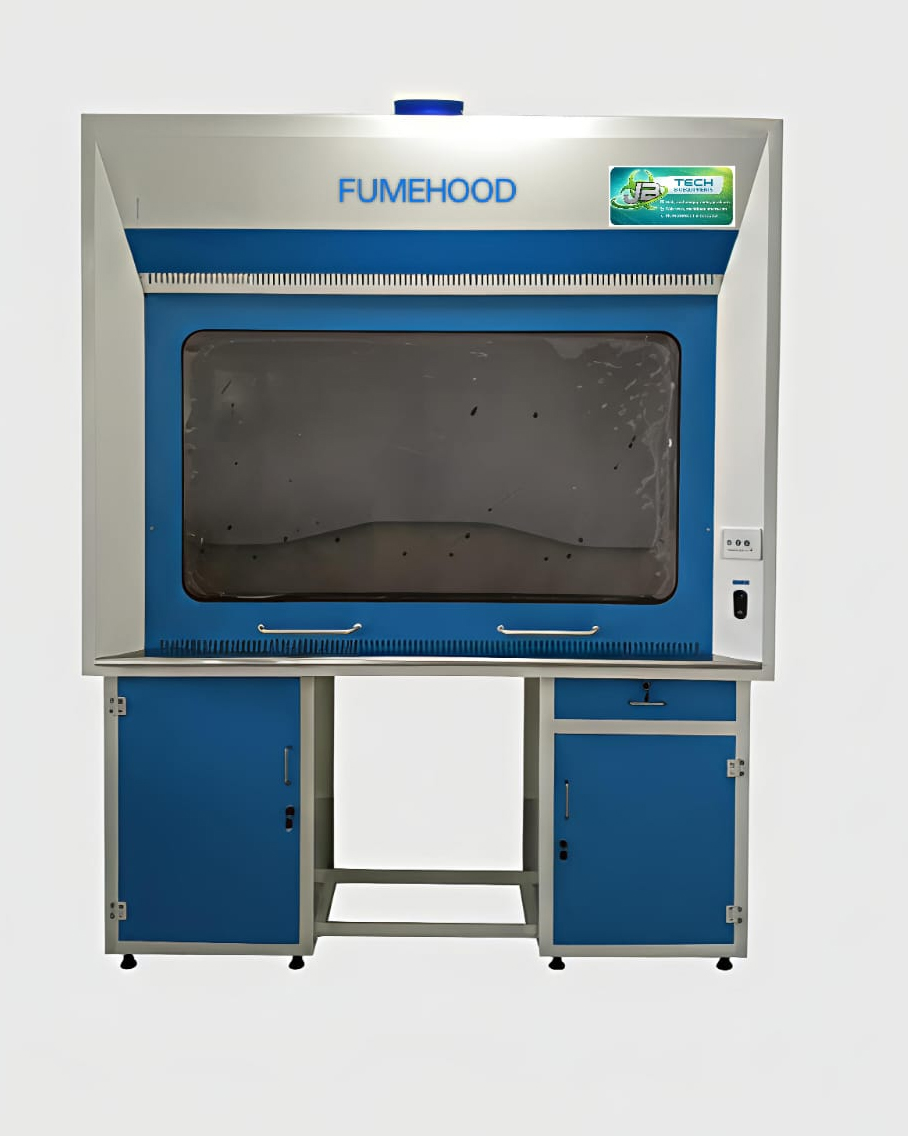
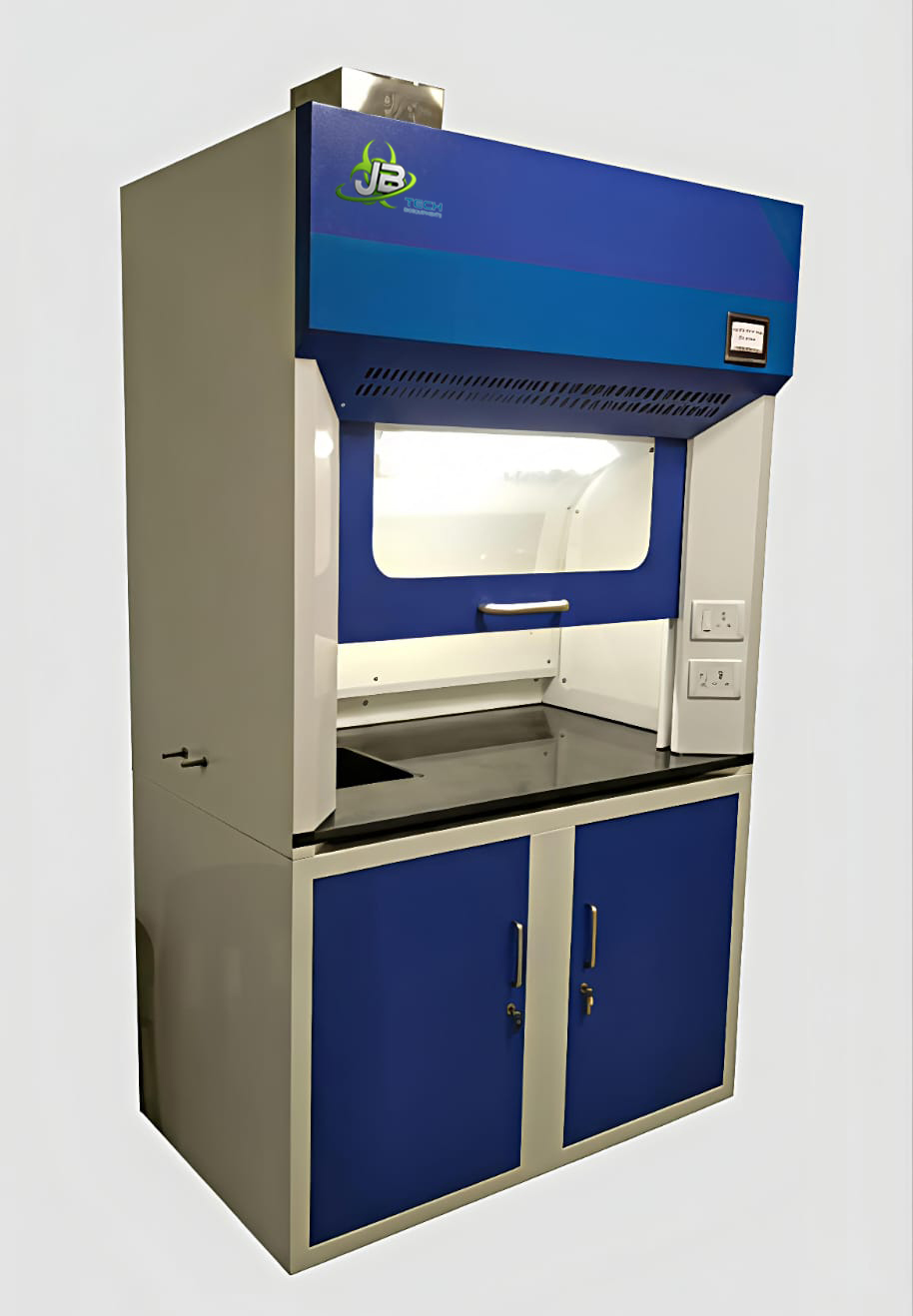
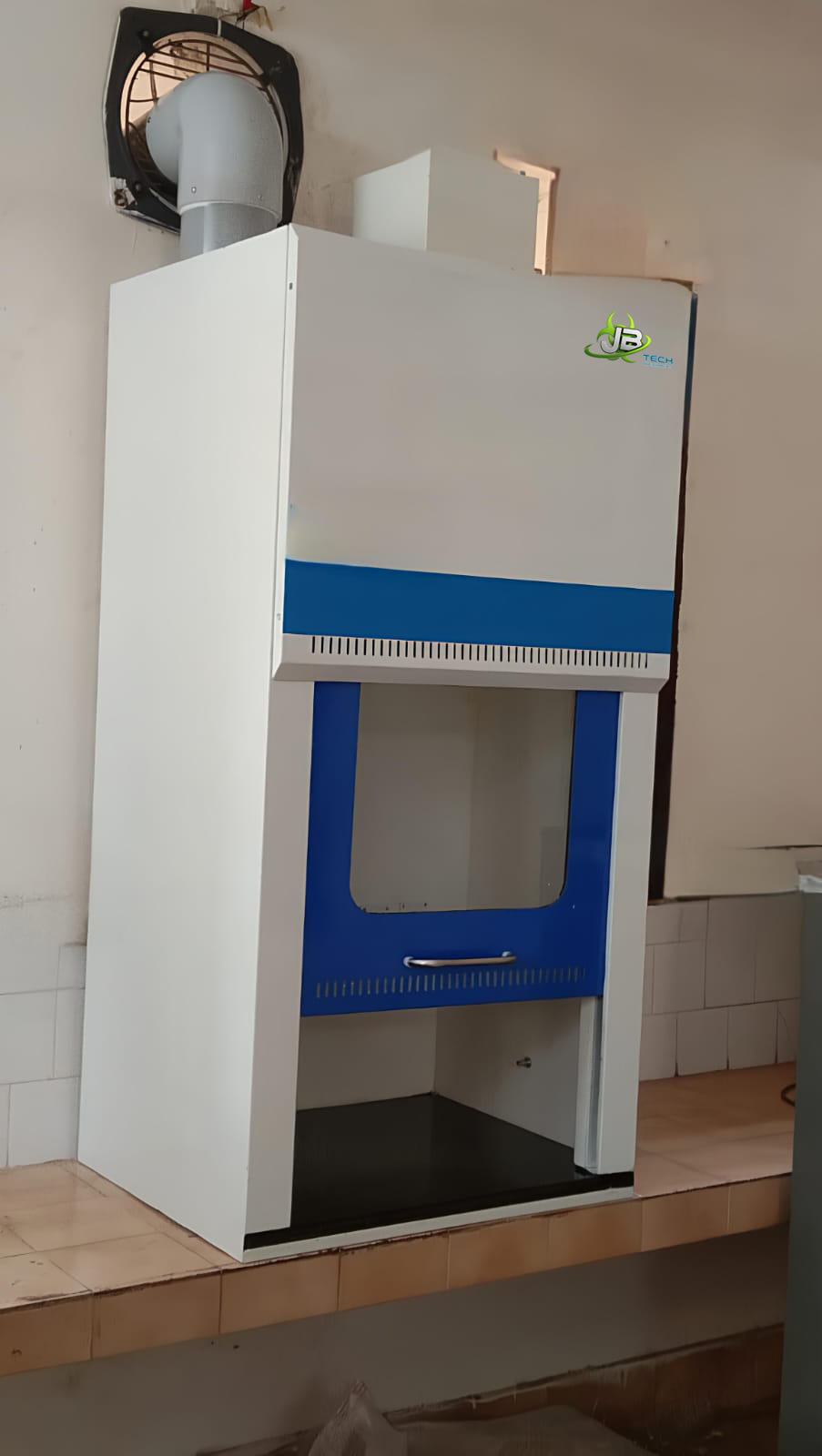
| Model No | JBFH 600 | JBFH 900 | JBFH 1200 | JBFH 1500 | JBFH 1800 |
| Working Size in Ft ( W x D x H ) |
2 x 2 x 3 | 3 x 2 x 3 | 4 x 2 x 3 | 5 x 2 x 3 | 6 x 2 x 3 |
| Customizable on size , PLC , Microprocessor , Electrical control, LED Display VFD Controller. | |||||
JB Tech Bio Equipments is a leading manufacturer and solution provider of cleanroom systems, laboratory equipment, and bio-safety solutions, committed to delivering high-quality, reliable, and compliant products for critical controlled environments.




No. 6/1A, Thangavel Nagar,
Jaffarkhanpet, Chennai – 600083


© 2026 JB TECH BIO EQUIPMENTS. All Right Reserved.
Designed & Developed by  Innov Touch Technologies Pvt Ltd.
 jbtechbioequipments@gmail.com
 +91 91500 09364