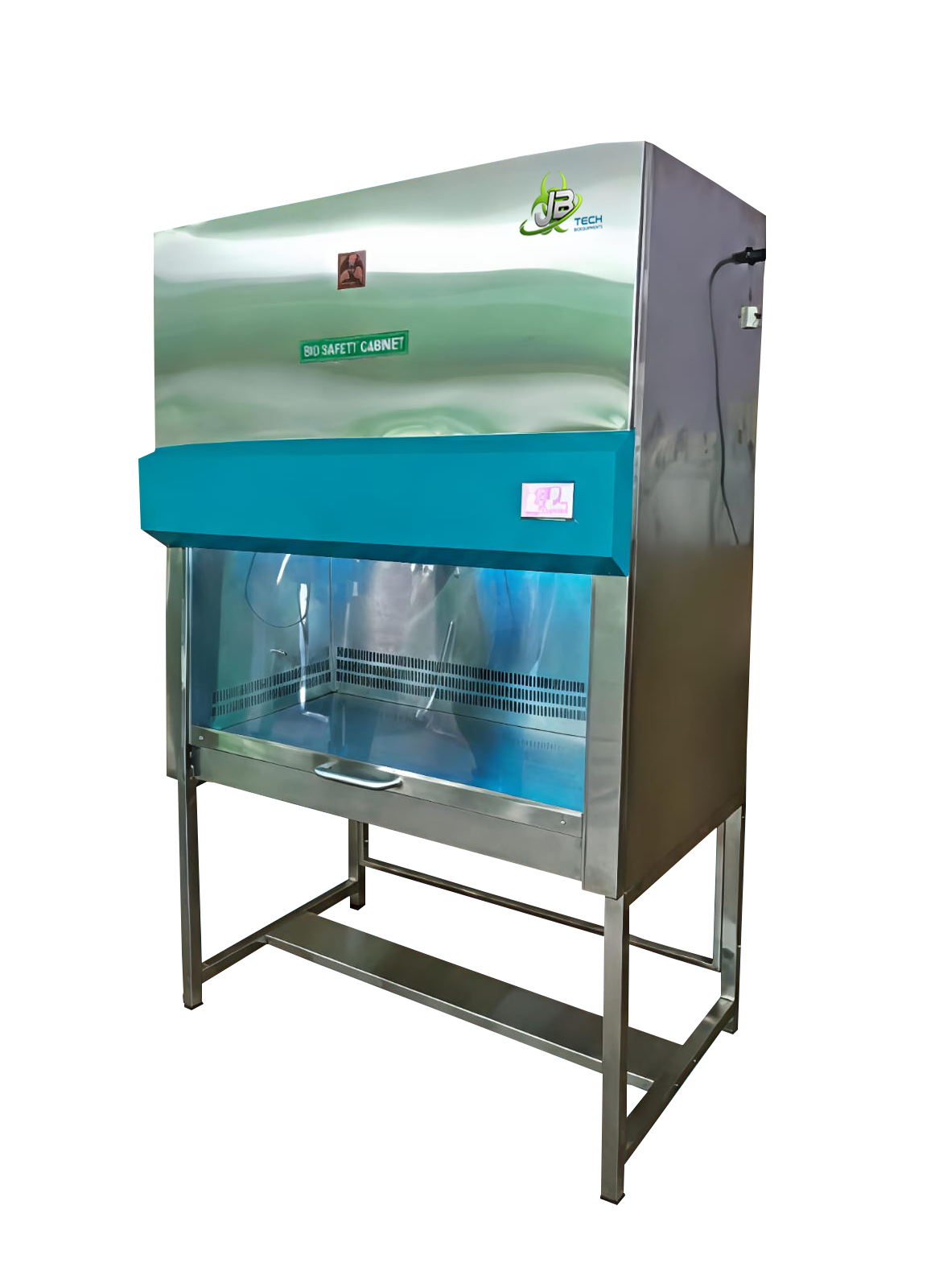
Bio Safety Cabinet
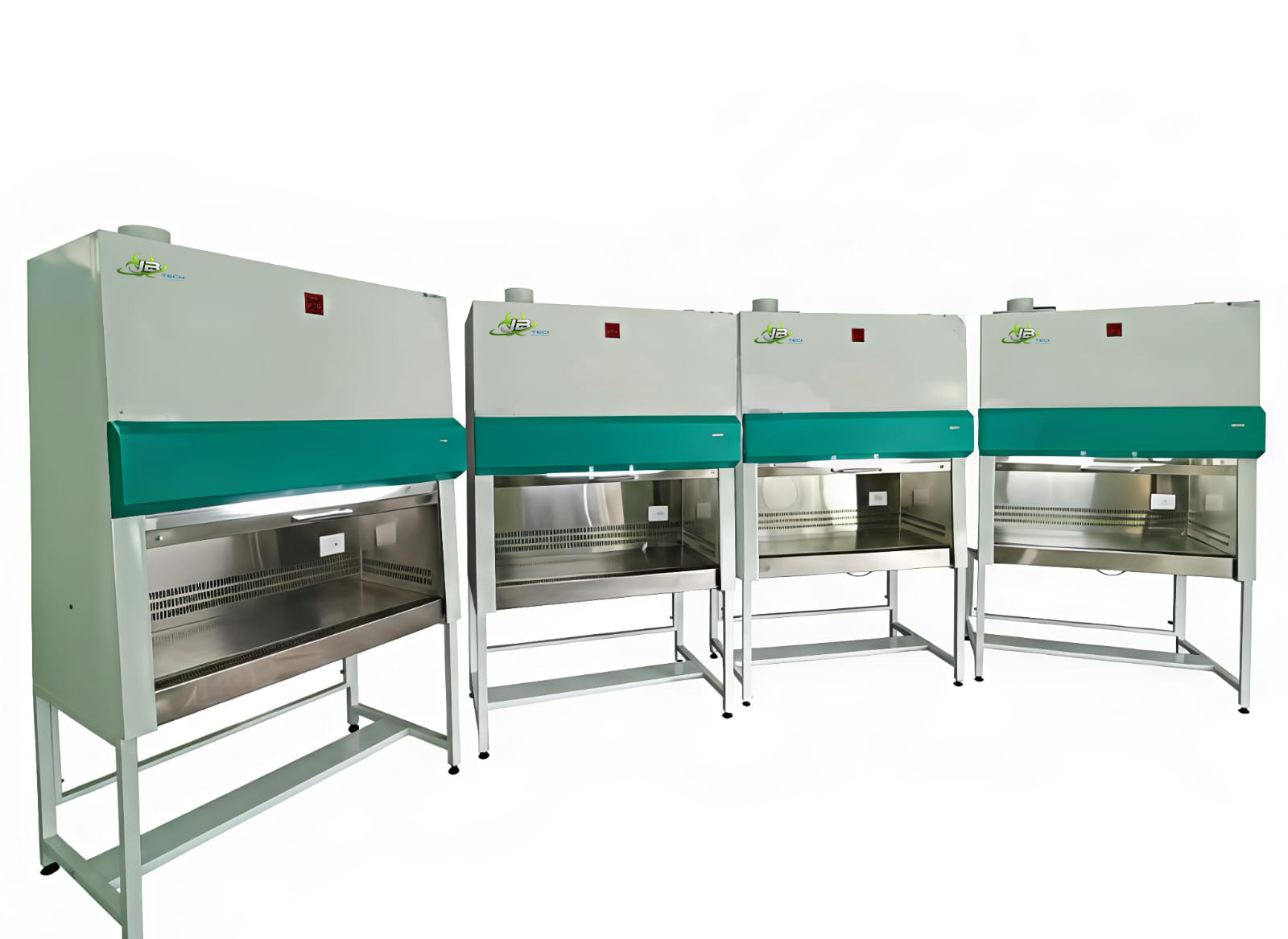
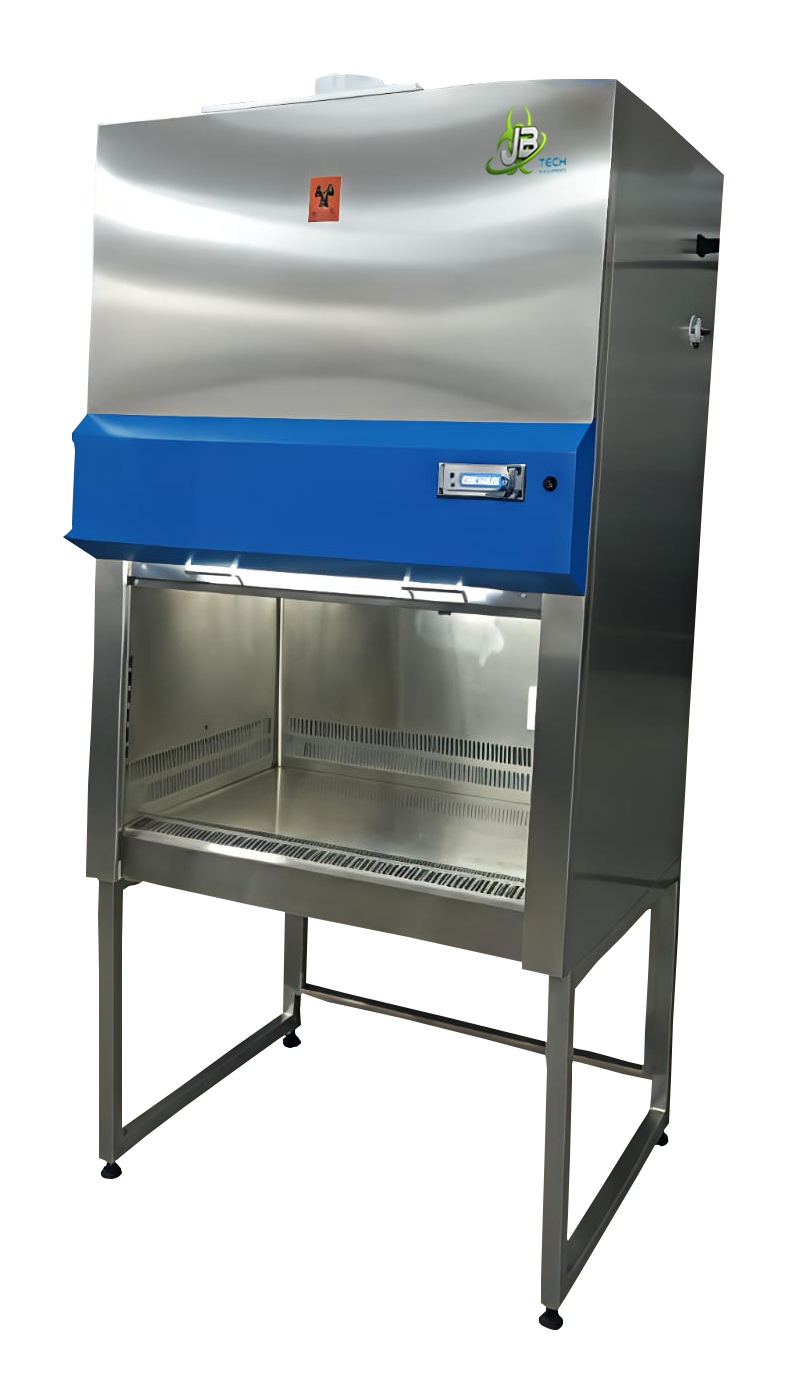
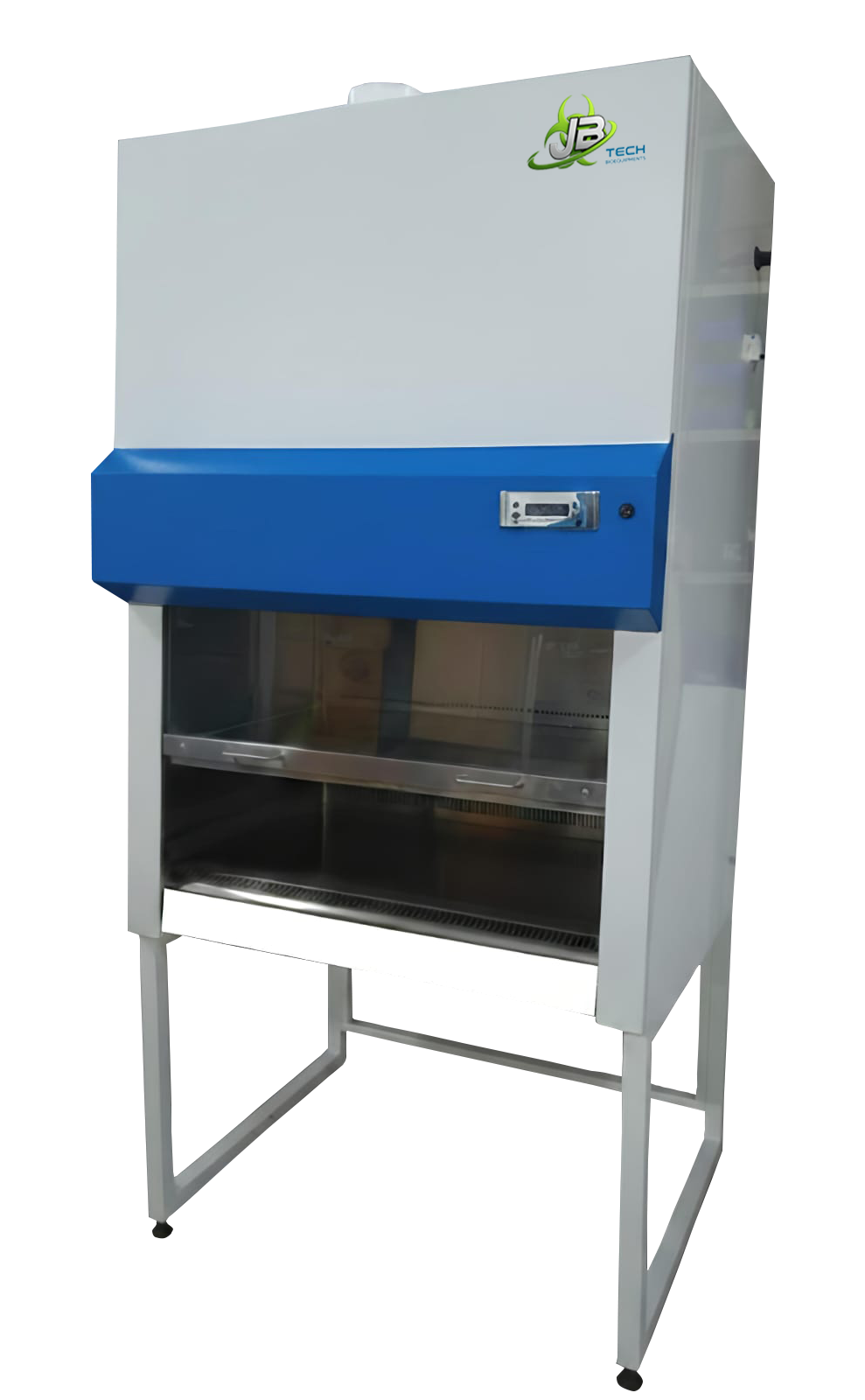
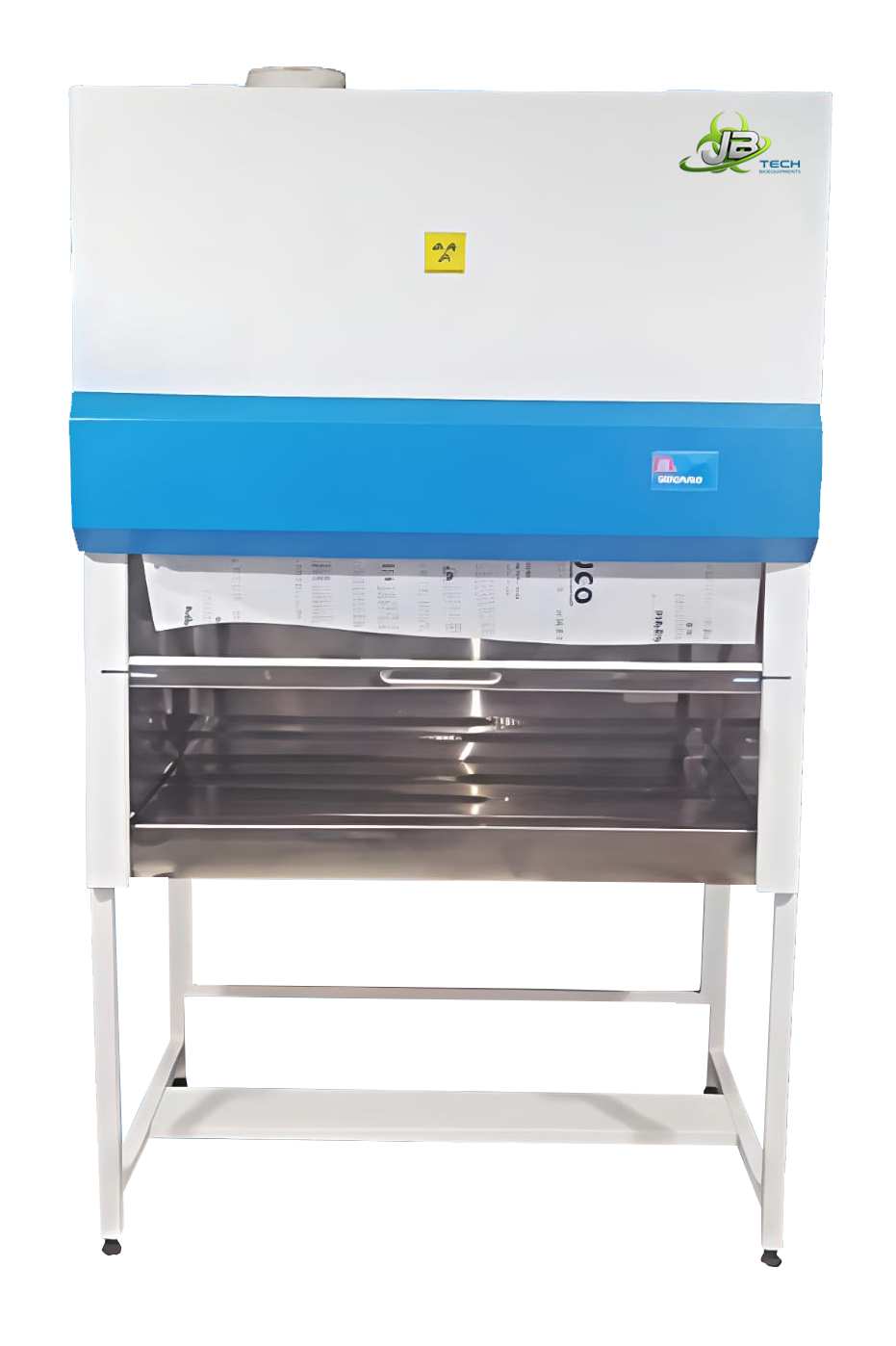
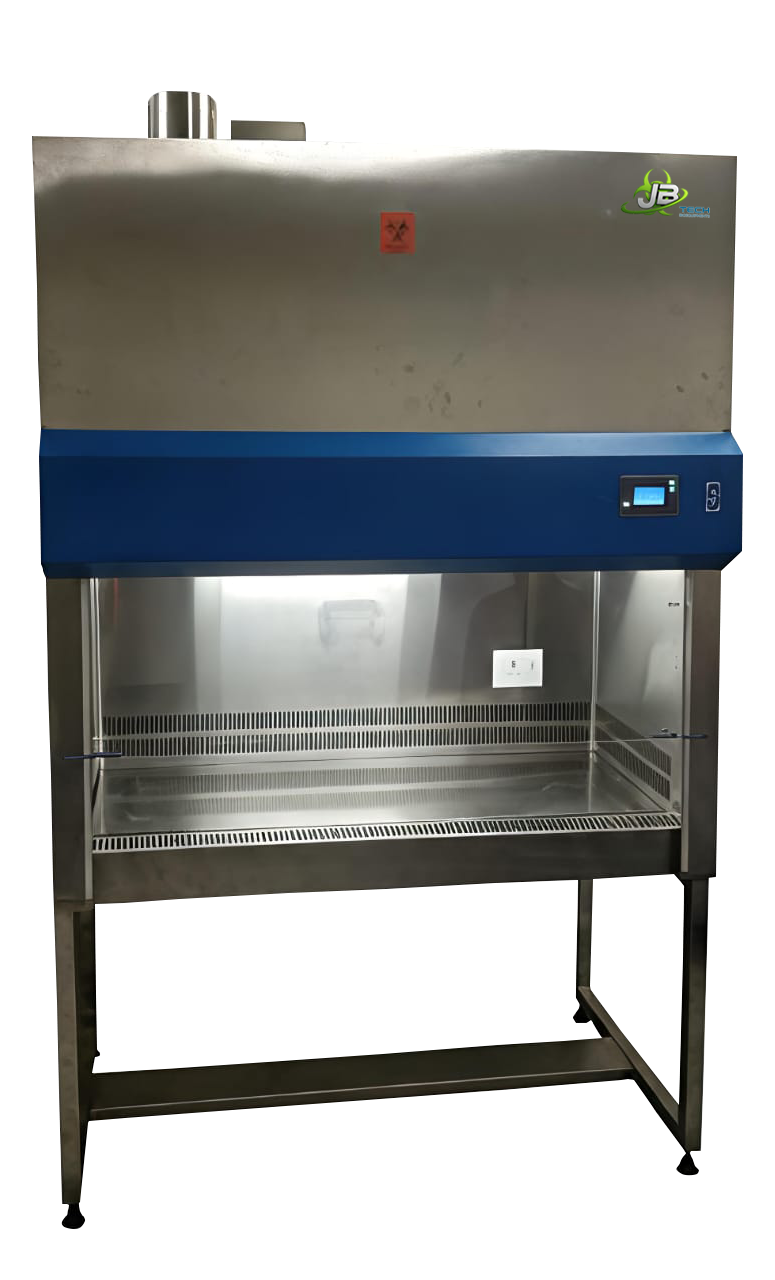
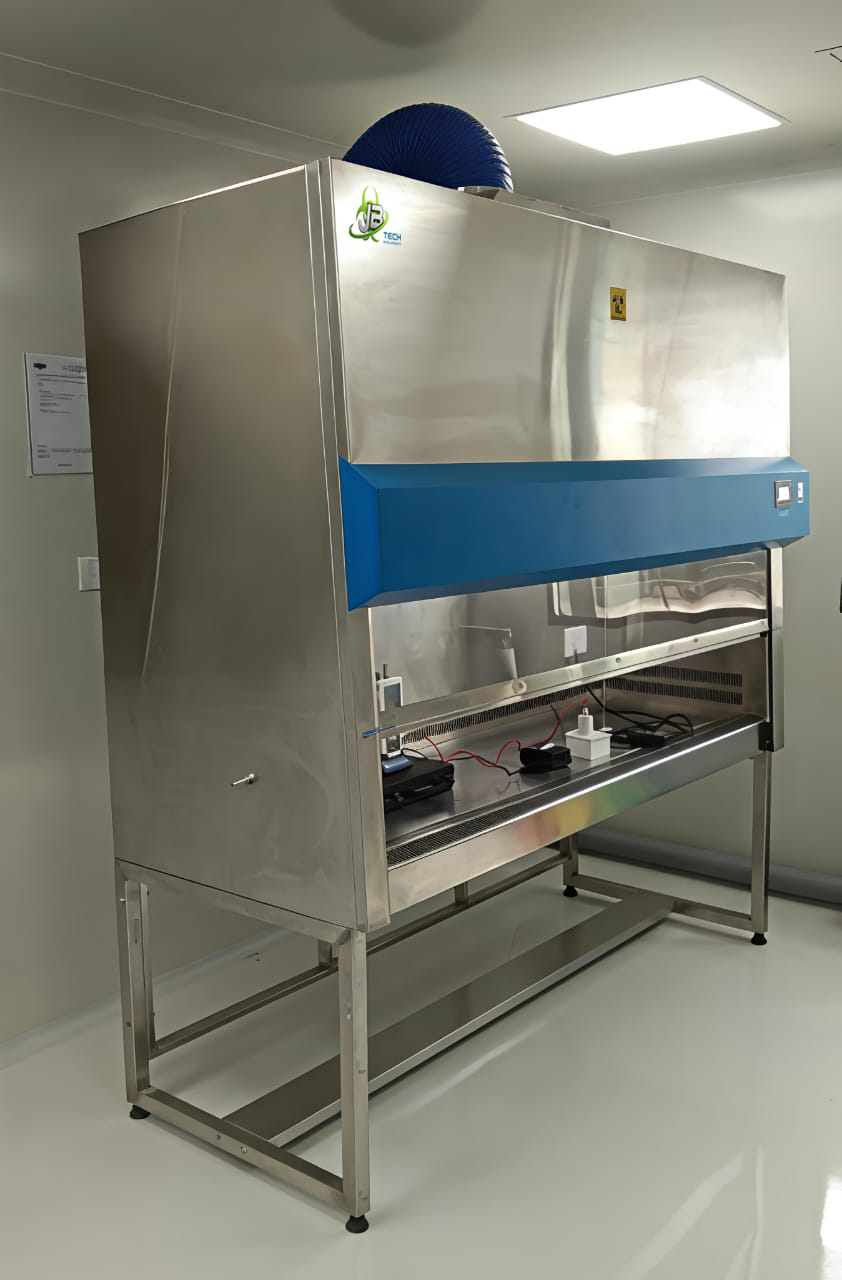
“JB TECH” Biosafety cabinets (BSCs) are ventilated enclosures that utilize inward airflow and HEPA filtration to provide a sterile working environment, protecting personnel, products, and the environment from hazardous biological aerosols. They work by creating negative pressure, drawing air through HEPA filters to remove.
Personnel Protection: An “air curtain” at the front opening prevents aerosols generated inside from escaping toward the user.
Product Protection: HEPA-filtered laminar (unidirectional) airflow moves downward over the workspace to prevent room contaminants from reaching the sample.
Environmental Protection: All exhaust air is passed through a HEPA filter, removing 99.97% of particles as small as 0.3 μm before being released back into the lab or outdoors.
Classes and Types of BSC
- The use of biosafety cabinets or other such physical containment is not required in the biosafety level 1, but depending on the risk assessment, some processes might require such containment.
- BSCs are an essential part of biosafety as they minimize the formation of aerosol, protecting the environment, the pathogen, and the laboratory personnel.
- Besides, most BSCs also function to sterilize biological materials that are kept inside the cabinets.
1. Biosafety Cabinet Class I
- Class I biosafety cabinets are typically used to either enclose specific equipment like centrifuges or for procedures like aerating cultures that might potentially generate aerosols.
- Biosafety cabinets of this class are either ducted (connected to the building exhaust system) or unducted (recirculating filtered exhaust back into the laboratory).
- In the Class I BSC, the room air is drawn in through the opening that also allows the entry of the operator’s arm during work.
- The air inside the cabinet then takes in the aerosol particles that may have been generated and moves it away from the operator towards the HEPA filter.
- The air moving out of the cabinet is thus, sterilized via the HEPA filters before its discharge to the environment.
2. Biosafety Cabinet Class II
- The principle of operation of Class II cabinets involves a fan mounted in the top of the cabinet that draws a curtain of sterile air over the workstation where the biological products are being handled.
- The air then moves underneath the work station and back up to the top of the cabinet before passing through the HEPA filters.
- The exhaust that moves out of the facility consists of air being drawn into the front of the cabinet underneath the work surface.
- The air drawn in acts as a barrier against the potentially contaminated air coming back out to the operator.
- Class II BSCs are further divided into five types depending on the exhaust system and the mechanism of work (recirculation of the exhaust air); Type A1, Type A2, Type B1, And Type B2.
- Type A1: The cabinets have a minimum inflow velocity of 75ft/min where the contaminated divided just above the work station and mixes with the inflow air. Air might be either recirculated after passing through the HEPA filters or exhausted out of the cabinet, also through a HEPA filter.
- Type A2 : The cabinets have a minimum inflow velocity of 100 ft/min. Approximately 60% to 70% of the contaminated air is recycled and pushed back into the workstation in the chamber through the downflow HEPA filter, while the remaining 30% to 40% is exhausted through the exhaust HEPA filter.
- Type B1 : The cabinets divide the airflow so that the contaminated air is directed towards the exhaust system while the air between the operator and the workstation mixes with the inflow and is recirculated. In the case of Type B1 cabinets, 40% of the air is recirculated, whereas the remaining 60% is exhausted out of the facility.
- Type B2 : The air then passes through a HEPA filter, where 100% of the air is exhausted through a dedicated duct system with an exhaust fan motor. The air moving out of the facility is thus sterilized before its release into the atmosphere. All of the contaminated airflow (100%) in a Type B2 cabinet is externally exhausted which means the air drawn into the cabinet is 100% exhausted into the atmosphere.
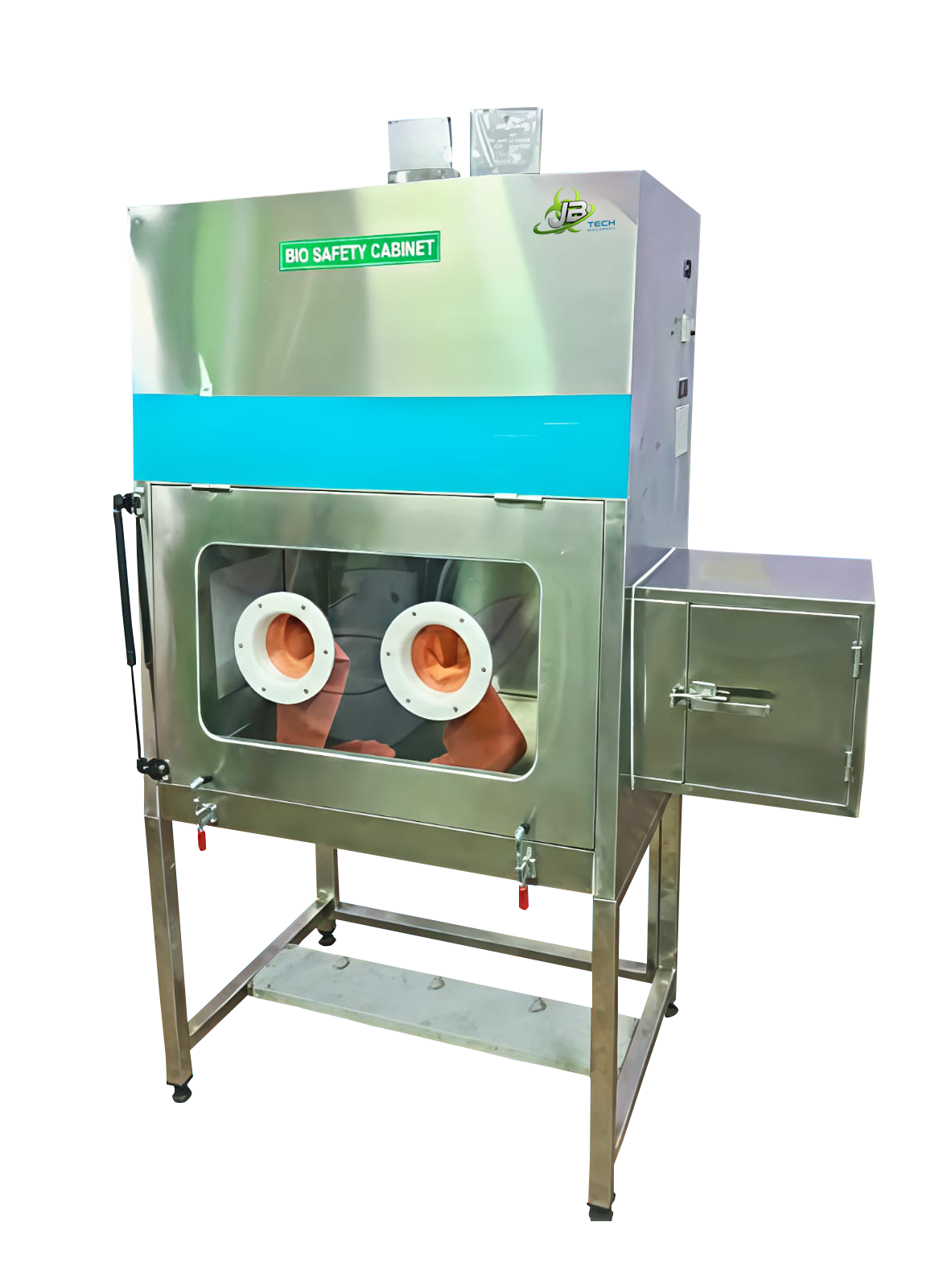
3. Biosafety Cabinet Class III – BSL 4
- Class III cabinets are leak-tight, totally enclosed but ventilated cabinets, where all air that either enters or leaves through the facility pass through a HEPA filter.
- The cabinets are provided with rubber gloves that are attached to the system to be used during operations in the cabinet. This is why these cabinets are also termed ‘glove boxes’.
- The cabinet even has a transfer chamber that facilitates the sterilization of materials before they leave the glove box.
- Even though the gloves restrict the hand movement of the operator inside the cabinet, it prevents direct contact between the operator and the samples.
- The exhaust air is treated with double HEPA filters or HEPA filters in combination with incineration.
- These cabinets can be used for all four Biosafety levels (1, 2, 3, and 4). But these are the most important for the manipulation of biological materials in the Biosafety level 4.
- These cabinets are mostly custom-built for specific laboratories with lab equipment built inside the chamber.
- All of these structural and design features provide maximum protection to the operator, the environment, and the sample against the high-risk group 4 pathogenic organisms.
Technical Specifications:
| Construction Material |
Powder-coated steel or Stainless Steel (SS 304/316). |
| Cleanliness Level |
ISO Class 5 (Class 100). |
| Filtration |
H14 HEPA filters, 99.99% to 99.9995% efficient at 0.3 µm particles. |
| Doors |
Materials are typically made of tempered safety glass or polycarbonate to ensure durability, visibility, and UV resistance. |
| Noise Level |
Operating noise is generally between 60 ± 5 dBA, with modern designs prioritizing noise reduction for user comfort. |
| Control Panel |
PLC with touchscreen or LED display. |
| Monitoring |
Magnahelic gauge for monitoring pressure drop across filters. |
| Safety |
Emergency stop buttons on Front sides. |
| Lighting |
LED or fluorescent tube lighting. |
| Options |
UV light, Ionizer, or HEPA-filtered ceilings. |
| Power Supply |
230 V AC, Single Phase. |
Common Application :
Their primary application is to provide containment, protecting the operator, the laboratory environment, and often the sample itself from infectious aerosols and particulates.
| Microbiology & Virology |
| Cell & Tissue Culture |
| Diagnostic Testing |
| Pharmaceutical Compounding |
| Biotechnology |








 Innov Touch Technologies Pvt Ltd.
 jbtechbioequipments@gmail.com
 +91 91500 09364